
By: Ibrahim Kaula Mohammed
This is Part II of our celebration of Governor Malam Dikko Umaru Radda’s three years in office. We are grateful to the good people of Katsina State for the warm reception of Part I, where we documented his groundbreaking work in health, education, security, agriculture, infrastructure, and energy. The feedback has been intriguing. Many have written asking for more. Some have shared their own stories of how the Governor’s initiatives have touched their lives. In this second installment, we respond to those requests by examining what the Governor calls his “domestication of development”—how federal ideas have been adapted to Katsina’s soil and made to serve her people. Read on.
The Architect of Job Creation: How KASEDA Changed the Game
When Governor Radda took office, he carried with him a memory. As Director-General of SMEDAN at the federal level, he had witnessed firsthand what proper support could do for small and medium enterprises. He had seen how a single intervention could unlock pathways to prosperity. He decided Katsina would not wait for federal programmes to trickle down. He would build the ladder himself.
In 2023, he established the Katsina State Enterprises Development Agency (KASEDA). The name matters. It is a local answer to a local question: how do we help our people take control of their economic destiny? KASEDA did not come with fanfare. It came with work.


Three years in, the numbers speak. KASEDA has created 5,373 jobs. Not promises of jobs. Not announcements. Created jobs—jobs that feed families, sustain livelihoods, and give young people reasons to stay in Katsina instead of fleeing to the cities. Three hundred and ninety-four small and medium enterprises have accessed non-interest loans. Let the reader sit with that number for a moment. In a country where interest rates make borrowing a luxury for the poor, KASEDA said: borrow without the weight of interest. Build without carrying debt’s burden.
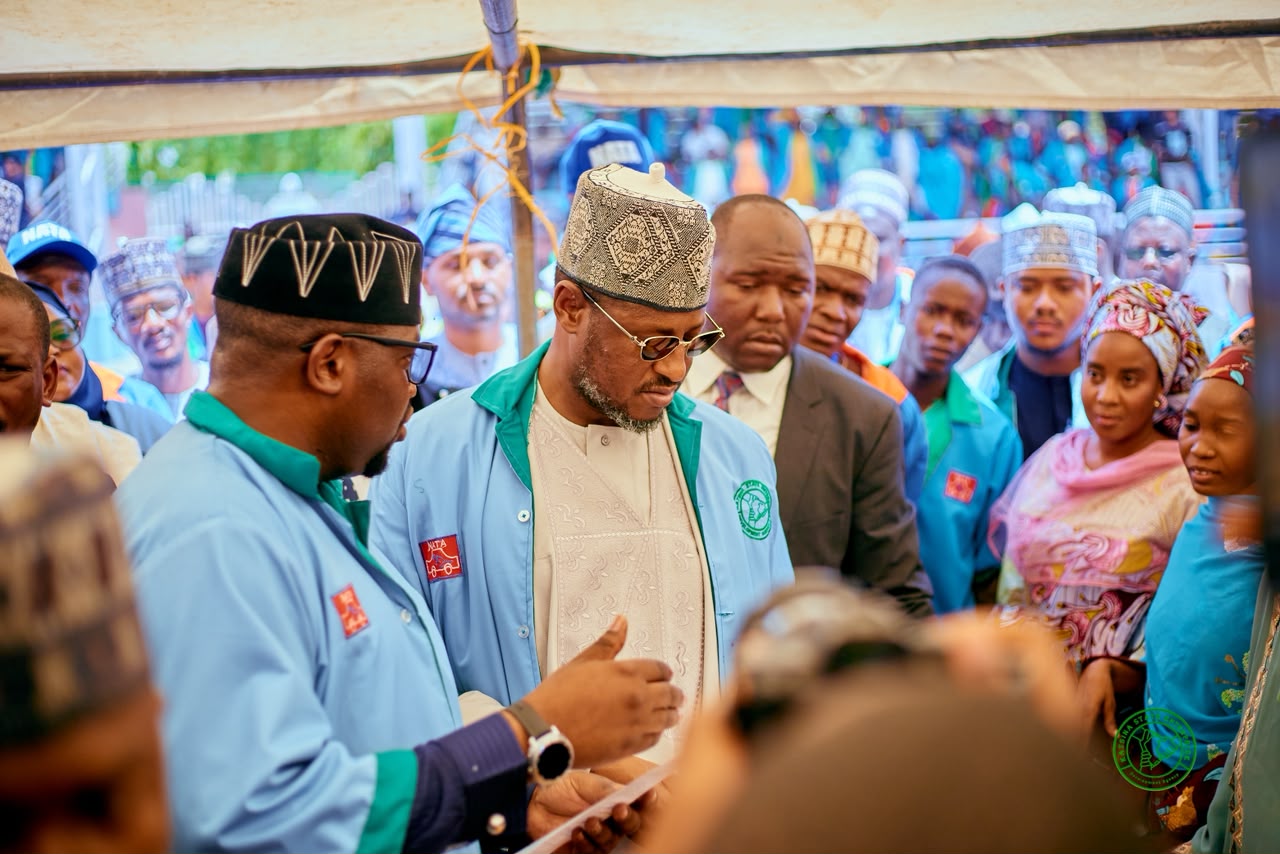
The collaboration with the Nigerian Automobile Technicians Association (NATA) reveals something important about how the Governor thinks. He did not invent solutions in his office. He went to where the work happens. He found the mechanics, the artisans, and the young people learning trades in the streets. He partnered with NATA and said: let us do this together. The result? Fifteen hundred apprentices trained in mechatronics. Three thousand youth schooled in auto mechanics—tricycle mechanics, motorcycle mechanics, spray painters, panel beaters, and auto-electricians—across all thirty-five local government areas. These are young hands learning to build. These are minds discovering they have value. These are futures being shaped.
Among the loan beneficiaries, something powerful happened. Those who received grant support used the money not just to survive but to grow. They settled shop rents that had been outstanding. They kept workers on payroll when others were laying off. They paid utilities and reinvested in their businesses. The shops did not merely stay open. They expanded. The pattern is clear: when you give people cash and trust, they know what to do with it.
Access to finance is the gate that keeps most small business owners locked out. They have the skill. They have the determination. They have the dream. What they lack is a key to the bank’s door. For years, Katsina entrepreneurs knocked on that door. It would not open.
Governor Radda understands that you cannot ask the poor to wait for the rich to decide they are worthy of credit. So he did something different. He created the gate himself. In January 2025, KASEDA launched the ₦3.4 billion MSME Managed Fund. The words matter: it is not KASEDA’s fund. It is managed by KASEDA, but it belongs to the MSMEs. ₦3.4 billion means something in Katsina. It means hope. It means a small trader can walk into a bank, not as a supplicant, but as someone whose government has guaranteed her access.
KASEDA partnered with two institutions: the Bank of Industry and Sterling Bank. The partnership is intentional. These are not fly-by-night operations. These are institutions with history, stability, and networks that can reach remote areas. Through Sterling Bank, three hundred and ninety-four MSMEs have accessed interest-free loans. Through the Bank of Industry, one hundred and eleven have crossed the threshold. Three thousand one hundred and thirty-one more applications have been submitted to BOI for documentation—a pipeline of hope waiting to flow.
What happens when access to finance is real? The data shows. Beneficiary businesses grew. Sales increased by twenty-three per cent. They found new markets. They did not just sell to their neighbours anymore. They reached forty-five per cent more customers. Production went up. Profit margins expanded. Workforces grew. The businesses did not just survive. They thrived.
And importantly, the gates opened for both men and women. Seventy-one per cent of beneficiaries are male. Twenty-nine per cent are female. In a region where women often face double barriers—the general barrier of poverty and the specific barrier of gender—twenty-nine per cent is not a token. It is a statement. It is a choice made by the Governor to ensure that the prosperity agenda did not leave half the population behind.
When the Vice President Comes to Katsina
In 2025, something happened that would have seemed unlikely a few years ago. Vice President Kashim Shettima came to Katsina to participate in the National Expanded MSMEs Clinic. His presence alone was a validation. It said: what Katsina is doing matters. It is worth the attention of the highest levels of government.
At that clinic, sixty vendors received three million naira each. Twenty outstanding businesses were given five million naira. Fifteen million naira was awarded to outstanding scholars. The amounts vary, but the message is consistent: your work matters. Your contribution to the economy is seen. Your struggle is acknowledged.
It is easy to miss the significance. It is easy to see the numbers and move on. But stop here. In a nation of 200 million people, in a state of about four million, the Vice President showed up. He showed up not to cut a ribbon at a government building. He showed up to celebrate small business owners, traders, and young people trying to make a living. That is not ceremony. That is recognition.
The Dikko Social Innovation Academy
Young people in Katsina face a question that haunts emerging regions: where do I fit in the future? The manufacturing jobs that built the middle class are gone. The agricultural work that sustained generations is mechanising. What is left? What can I build? What can I become?
Governor Radda decided the answer was innovation. Not the grand kind that happens in distant laboratories, but the kind that starts in a young person’s mind and becomes a service or product that solves a problem. So he established the Dikko Social Innovation Academy.
Eighteen young people came through the doors. They learned software development. They studied data analytics. They mastered digital marketing. They understood UI/UX design. They delved into product management. They imagined what businesses could look like. They built and tested ideas.
Out of eighteen students, nine developed innovation-led startups. The rate of success is striking. It suggests that the barrier to innovation in Katsina is not a lack of talent. It is a lack of opportunity. Give young people the space, the knowledge, and the tools. Watch what they build.
The Grassroots Revolution: Community Development Programme
Somewhere in a policy document, someone wrote: “development must be centralised to be effective.” That someone never visited a village, never asked a community what it needed, and never experienced the gap between what government plans and what people actually require.
Governor Radda rejected that logic. Instead, he built from the bottom up. The Community Development Programme is his answer to the question: how do we let people decide their own future?
The model is radical in its simplicity. Rather than have the government decide that all communities need the same things, Katsina said: tell us what you need.
The model is radical in its simplicity. Rather than have the government decide that all communities need the same things, Katsina said: tell us what you need. The response came from three hundred and sixty-one wards. Each ward identified its priorities. Each ward got a budget to execute those priorities. In January 2025, Governor Radda released three billion naira to kick-start the programme across all wards. Each ward received ten million naira and the authority to spend it on what the community determined.
What did communities do with that freedom? They did what any wise person does when given the means: they invested in their future. Community centres were established—hubs for economic empowerment, learning, and social support. Not government centres imposed from outside. Community centres born from community need.
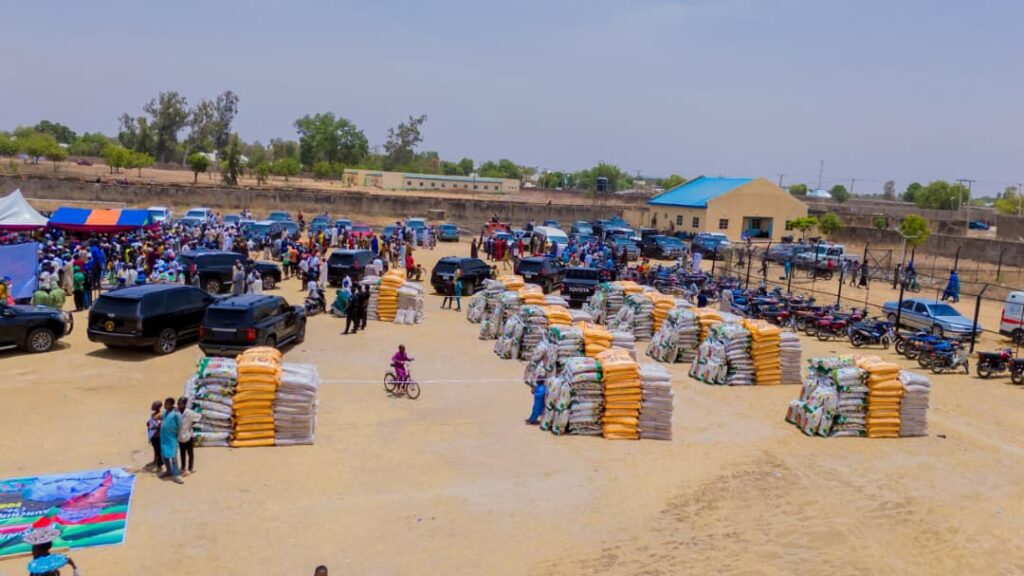
To move money and monitor progress, the Governor distributed eleven hundred motorcycles to Community Development Officers, Community Support Officers, and Community Learning Officers. Under a hire-purchase scheme, the government paid fifty per cent of the cost. Beneficiaries repaid the balance over five years. The logic is clear: if you own a motorcycle, you are responsible for it. You will maintain it. You will use it. Ownership breeds accountability.
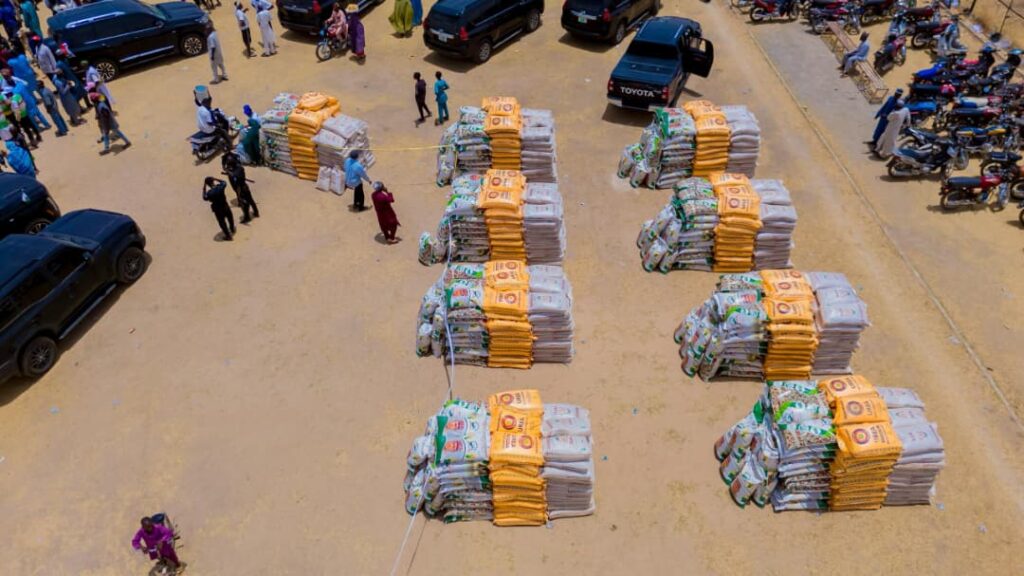
The agricultural support was equally strategic. Four thousand solar irrigation pumps were distributed. One hundred bags of fertiliser per ward. The government was not just giving gifts. It was saying: we want you to farm year-round. We want you to escape the trap of single-season agriculture. Over five hundred boreholes were rehabilitated, ensuring water for life and cultivation.
And when drought came, when crops failed elsewhere, Katsina distributed ninety thousand bags of grains. The people did not starve while waiting for the next harvest. The safety net held.
Alignment with National Vision
In late 2025, President Bola Ahmed Tinubu launched the Renewed Hope Ward Development Programme. When Governor Radda saw it, he recognised something. The President was walking the same path Katsina had pioneered. The Governor commended him—not out of politics, but out of genuine recognition: we are moving together toward the same destination.
What Katsina did in November 2024, the nation was now doing. What started as a grassroots experiment became a national model. That is how change happens. It does not start in Abuja in a policy paper. It starts in a state where a Governor says: I believe in letting people decide their own future. It spreads when the President sees what works and says: we will do this too.
When Women Lead: The Empowerment Agenda Takes Shape
On the day Governor Radda flagged off the women’s empowerment scheme, fourteen thousand four hundred and fifty women came forward. Widows. Mothers. Artisans. Traders. Farmers. Tailors. Food processors. Women who had been told they were too old, too uneducated, or too poor to build something. They came because someone finally said: you have value. You have capability. You deserve a chance.
The Governor’s gift was not charity. It was capital. Forty thousand heads of goats were earmarked for distribution. Not randomly. Through community committees. Selection based on need, commitment, and potential.
The distribution model reveals the Governor’s strategy. Each ward would have ten women and one large-scale farmer. Each woman would receive four heads of goats—one male and three females. A large-scale farmer would receive fifty. The arithmetic is deliberate. Four goats means milk for family consumption. Four goats means the possibility of breeding. Four goats means dignity and income. But it also means responsibility. You own the goats. You care for them. You make them profitable.
By January 2025, distribution had begun. The project was valued at 5.4 billion naira. The number itself is staggering. It signals something important: the Governor does not toy with women’s empowerment. He invests serious money in it.
Three thousand six hundred and ten women were to receive goats. When a woman owns goats, she is no longer a supplicant to her husband’s income. She has her own. When a woman builds a livestock business, her children see her as a provider, not merely a dependent. Seventeen-year-old girls in Katsina can now imagine themselves as mothers who own businesses. That changes everything.
KYCV: The Forgotten Centres That Found Recognition
The Katsina Youth Craft Village (KYCV) existed before Governor Radda. But they existed in obscurity. Located in Katsina, Daura, Dutsin-Ma, Malumfashi, Mani, and Funtua, they were community-based. They were doing the work of training young people in trades. But they were not recognised. They were not funded. They were not connected to national programmes.
Under the Building Your Future administration, something changed. The centres were given strategic support. They were funded properly. They were connected to the National Skills Qualifications Framework. And six of them secured national recognition from the National Board for Technical Education (NBTE). They became official training providers.
What did that mean in practice? It meant that when a young person finished at KYCV, the certificate meant something. It opened doors. It could lead to employment. It could lead to entrepreneurship. It could lead anywhere.
The Governor approved an electrical training programme for seventy-four artisans. Green technology. Solar. Renewable energy. Not backward-looking training for jobs that are disappearing. Forward-looking training for jobs that are emerging. Not teaching young people to fix what has already broken. Teaching them to build what the future will need.
KYCV also upgraded vehicles. No fewer than twenty long-abandoned vehicles were refurbished. Two Toyota Hilux trucks from 2008 were taken and modernised to 2024 operational standards. Where once these machines would have been scrapped, they were brought back to life. The message to young people was clear: in Katsina, we do not discard. We regenerate. We repair. We improve.
Two months before this writing, approval was granted for resettlement packages for sixteen hundred and sixty-two KYCV graduates across the three senatorial districts. What does a resettlement package mean? It means a young person who completes vocational training does not graduate into unemployment. The government is working to help them establish themselves, set up shops, buy tools, start businesses, and transition from student to provider.
In November 2024, KYCV secured sixty million naira through the IDEAS-TVET Award. Sixty million naira is not a gesture. It is a commitment. It is the government saying: we believe in what you do here. We are prepared to fund it substantially.
The cumulative effect is powerful. Young people learning trades at KYCV are not learning in isolation. They are being trained by recognised institutions. They are being supported by serious funding. They are being helped to establish themselves after graduation. Poverty and unemployment begin to retreat. Creativity among the youth begins to flourish.
The Iceberg Beneath: Much More Lies Hidden
What you have read here is not exhaustive. What we documented in Parts I and II are merely the peaks visible above the water. The iceberg extends far deeper. There are stories of individual families lifted from destitution. There are accounts of communities transformed. There are testimonies of young people who decided to stay in Katsina instead of leaving.
To those who remain sceptical, to those who are blind to good work or who choose not to see it, we issue an invitation: visit Katsina. Do not come as a critic with a closed mind. Come with genuine curiosity. Ask the people who live here. Ask the trader whose business has grown. Ask the farmer whose irrigation system changed her dry season. Ask the young man trained at KYCV who now has a job. Ask the woman who received goats and now resells them at the market. Ask them if they see change. Ask them if their lives are better than three years ago. Listen to their answers. Their testimonies are more powerful than any feature story a journalist can write.
The Building Your Future agenda is not negotiable. It is not rhetoric. It is not campaign language waiting to be forgotten after elections. It is a real, grounded, deliberate effort to transform Katsina State through the dedication of its people and the strategic leadership of Governor Malam Dikko Umaru Radda. Three years in, the proof is not in the words. The proof is on the ground—in the lives changed, in the businesses opened, in the young people trained, in the women empowered, and in the communities strengthened.
Katsina is building its future. The walls are rising. The foundation is solid. The end is not yet in view. The work continues.
Ibrahim Kaula Mohammed is the Chief Press Secretary to the Governor of Katsina State.
